
CCLP volunteer Elzer McReynolds argues why tax flight is a harmful idea to states trying to enact higher taxes on the top 1% of earners.
Recent articles
CCLP reflections from Litigation and Advocacy Leaders Conference
Annie Martínez reflects on the Litigation and Advocacy Leaders Conference they attended with support from our CCLP Rights Defenders donors.
Economic policy and young adulthood in Colorado: A new report series from CCLP
CCLP’s newest report series focuses on economic policy and young adulthood in Colorado and the ways in which public benefits do and do not support their needs.
CCLP comments on Xcel Energy’s proposed rate increase
Milena Tayah provided comments to the Public Utilities Commission regarding Xcel Energy’s proposed rate increase on Colorado consumers’ energy bills.
Advocacy Alert: Support SNAP solution
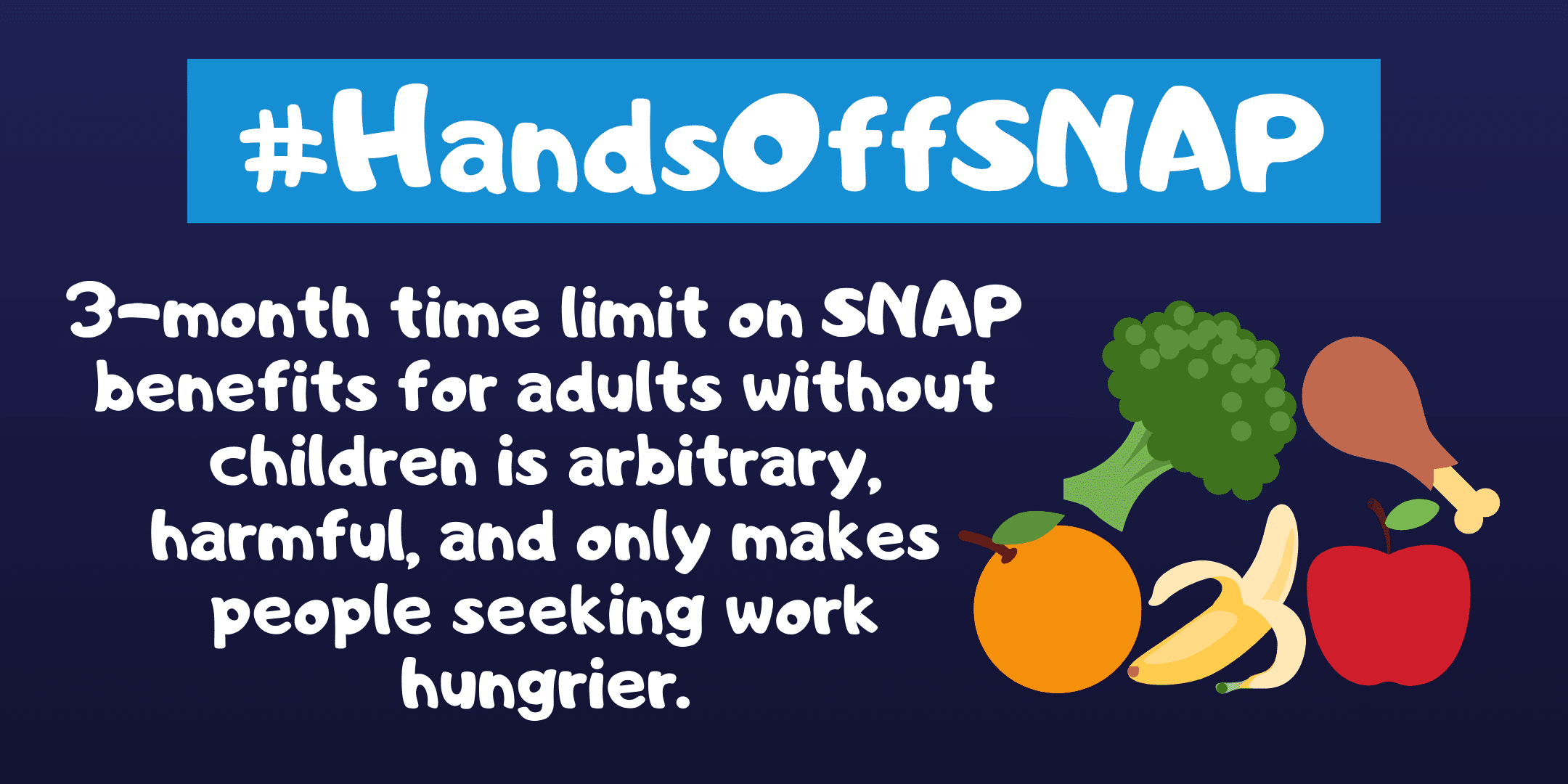
In 1996, Congress created a time limit in the Food Stamp Program, now known as SNAP, for unemployed childless adults between the ages of 18 and 49 years old, referred to as ABAWDs. Recipients in this group can only get benefits for three months out of 36 months unless they can show they are working 80 hours per month or meet some other exception.
Twenty years after the time limit was adopted, an estimated 41,000 Supplemental Nutrition Assistance Program enrollees in Colorado fell into the ABAWD category. Last year, the USDA proposed changes that would enforce even stricter requirements that would force hundreds of thousands of Americans off the program and give states less discretion to obtain waivers in the face of high unemployment and low job availability. The proposed rule change spurred nearly 30,000 comments from public health professionals, anti-hunger advocates and other concerned citizens, including CCLP.
Rep. Barbara Lee, D-Calif., is proposing a solution to this problem: The Improving Access to Nutrition Act would lift the arbitrary time limits on SNAP benefits for this population, ensuring that all adults have access to food.
Nearly one in 11 Coloradans struggle to put food on the table, including many able-bodied, working adults who may be struggling due to a job loss, lack of available full-time hours or minimum-wage pay. There is no evidence to suggest that limiting their access to food would lead to greater employment, especially in a time when work options available to this group are increasingly part-time and unstable. The Colorado Department of Human Services has observed that the ABAWD population also faces significant challenges in finding and maintaining employment, such as: lack of a high school diploma or its equivalent; no significant/relevant work history; felony convictions; substance abuse; mental and physical health problems; housing problems; and transportation problems. A recent analysis by Mathematica Policy Research reveals that a greater share of ABAWD SNAP participants live in poverty nationally compared to other SNAP participants, and often at a deeper level of poverty – at or below 50 percent of the federal poverty guideline.
We believe that lifting these time limits would help our client population stay healthy while pursuing full-time employment and also benefit Colorado’s economy. We urge readers to contact their congressional representative in support of the Improving Access to Nutrition Act.
Recent articles
Guest Column: Tax Flight, The Harmful Persistence of an Unfounded Idea
CCLP volunteer Elzer McReynolds argues why tax flight is a harmful idea to states trying to enact higher taxes on the top 1% of earners.
CCLP reflections from Litigation and Advocacy Leaders Conference
Annie Martínez reflects on the Litigation and Advocacy Leaders Conference they attended with support from our CCLP Rights Defenders donors.
Economic policy and young adulthood in Colorado: A new report series from CCLP
CCLP’s newest report series focuses on economic policy and young adulthood in Colorado and the ways in which public benefits do and do not support their needs.
CCLP comments on Xcel Energy’s proposed rate increase
Milena Tayah provided comments to the Public Utilities Commission regarding Xcel Energy’s proposed rate increase on Colorado consumers’ energy bills.