
Credit can serve as a lifeline when a family or household lacks the money to meet an emerging expense. However, debt itself can quickly become a drain on finances. For many low-income individuals, old debts represent a significant barrier to stability and self-sufficiency. Many could have made ends meet each month, but for their debt and interest payments.
To better understand the relationship between poverty and debt, we conducted listening sessions with a cohort of fifteen low-income Coloradans, asking them to speak about their experiences with using credit and having debt. These interviewees, referred by service providers, were presented with open-ended questions about their access to credit and how carrying debt affected their lives. These questions resulted in wide-ranging conversations about how they arrived at their current financial circumstances, and the role debt has played. We also spoke with service providers to get a broader sense of the debt-related challenges their clients were facing.
Our interviews suggest that low-income Coloradans carry a diverse array of debts beyond traditional consumer debt, making it difficult to give a picture of the debts a “typical” low-income household might carry. Each type of debt impacts households differently, but all collectively contribute to financial instability.
This report, funded in part by The Bell Policy Center, concludes with policy recommendations for how Colorado might support low-income residents in breaking cycles of poverty and debt.

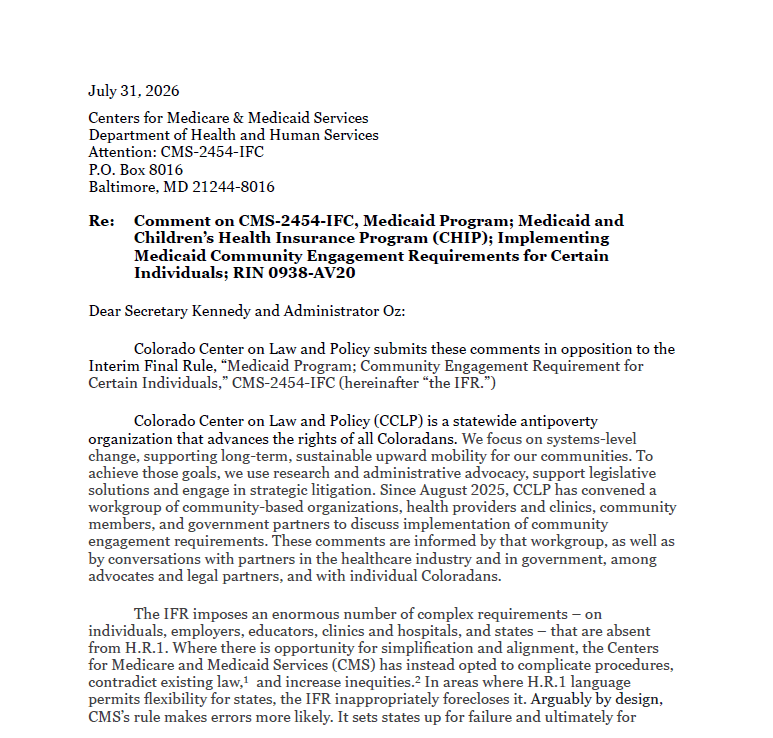
Skills2Compete Public Comment on the Medicaid Interim Final Rule
Public Comment, Publications