A voter guide to funding health care, childcare and public schools Coloradans need affordable health care, reliable childcare, and strong public schools to build economic security. Colorado Center on Law and Policy supports Amendment 87 and Proposition NN because...
Margaret "Maggie" Lea served as Grants Manager for Mile High Connects until its closure in 2022. In this capacity she was responsible for advancing MHC's collaborative work through data & evaluation, communications, and collective support and investment, and she played a key role in cultivating and sustaining local and regional partnerships.
Recent articles
Economic policy and young adulthood in Colorado: Part Two
Part Two in our Young Adult series examines eleven common--but false--narratives about young adults, life choices, and the opportunities available to them.
Guest Column: Tax Flight, The Harmful Persistence of an Unfounded Idea
CCLP volunteer Elzer McReynolds argues why tax flight is a harmful idea to states trying to enact higher taxes on the top 1% of earners.
CCLP reflections from Litigation and Advocacy Leaders Conference
Annie Martínez reflects on the Litigation and Advocacy Leaders Conference they attended with support from our CCLP Rights Defenders donors.
The Acute Meets The Chronic: The Work of Our Collaborative in 2020
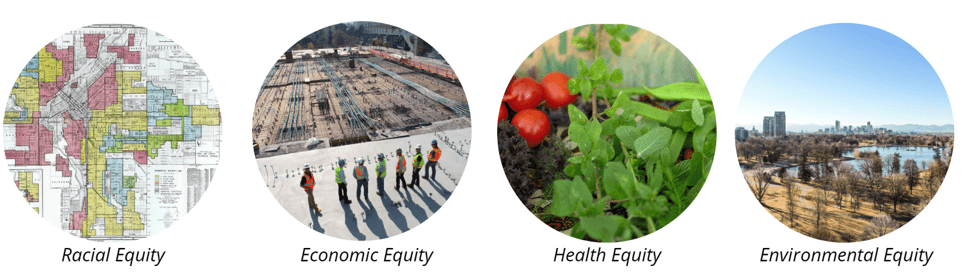
Our Program Update, July 2020:
COVID-19 has acutely demonstrated that everyone needs to live in safe and healthy communities – communities that advance economic opportunity, prevent residential, commercial and cultural displacement, build on local assets, promote mobility and connectivity, and enable equitable access to planning, development, and decision-making. Our work now is to collaboratively navigate escalating risks while continuing to lay the foundation for a new system paradigm – one that we have been working for all along.
Mile High Connects is taking a stand for an equitable, resilient Metro Denver where community-driven solutions are at the center of transformative change. In order to increase equitable investment into community-centered solutions, we are committing to:
- strengthen community leadership and development with financial resources and technical assistance,
- institutionalize equitable development through advocacy and practice, and
- activate and deploy equitable capital for catalytic projects that will influence and leverage public investments while preserving place
Based on years of deep engagement in community, and the continued generous support of The Denver Foundation, the Piton Foundation, the Colorado Health Foundation, Gates Family Foundation, Colorado Housing and Finance Authority, Wells Fargo and US Bank, we have recommitted our program work to three local geographies that experience persistent trauma, inequitable allocation of resources, and are most at risk of displacement pressures – Southwest Adams County, West Denver, and East Denver. Leveraging continued support from the Strong, Prosperous, and Resilient Communities Challenge (SPARCC), a multi-city national cohort of regional collaboratives, our goal is to increase equitable investment into community-driven solutions by 2023.
Community ownership is a critical opportunity in this moment and its success will rely upon connected, informed and organized communities with strong leadership. Work across our target geographies will focus on building community development infrastructure and leadership development. In West Denver, for example, we will support the growth of their Community Connector program established to get folks connected to resources in response to the health and financial crises. In Southwest Adams County, we will support the design and development of a community organizing institute. We will also explore Community Investment Trust (CIT) models and identify local opportunities to implement a pilot.
Critically, in our effort to institutionalize equitable development, we will identify policy gaps and opportunities brought to light by COVID-19 and recent social unrest, and advocate for local, state and national policies that reduce displacement of residents and businesses. We plan to influence local and regional planning efforts to support the application of an equity lens in every decision made. We will also sponsor and promote existing Community Benefits Agreement (CBAs) efforts across our region.
Capital is a crucial piece of the community ownership puzzle, and we are committed to the equitable deployment of it. Mile High Connects will continue to support pre-development efforts in West Denver along Morrison Road to support BuCu West in creating a business corridor that preserves culture and place. We will also support the development of Montbello’s grocery-store-anchored cultural hub that includes affordable rental housing. Over in East Denver, with compounded displacement pressures at play, we will align resources and partners to create and preserve affordable housing units.
As our community partners focus both on recovery efforts and the long-term root cause remedies to systemic oppression, we stand where the acute meets the chronic. We have an opportunity to reimagine the way forward, one that unlocks community power, promotes racial equity, rebalances our economic structures, and ensures housing for all.
Recent articles
Why CCLP supports Amendment 87 and Proposition NN and opposes Proposition 136
A voter guide to funding health care, childcare and public schools Coloradans need affordable health care, reliable childcare, and strong public schools to build economic security. Colorado Center on Law and Policy supports Amendment 87 and Proposition NN because...
Economic policy and young adulthood in Colorado: Part Two
Part Two in our Young Adult series examines eleven common--but false--narratives about young adults, life choices, and the opportunities available to them.
Guest Column: Tax Flight, The Harmful Persistence of an Unfounded Idea
CCLP volunteer Elzer McReynolds argues why tax flight is a harmful idea to states trying to enact higher taxes on the top 1% of earners.
CCLP reflections from Litigation and Advocacy Leaders Conference
Annie Martínez reflects on the Litigation and Advocacy Leaders Conference they attended with support from our CCLP Rights Defenders donors.