
A voter guide to funding health care, childcare and public schools Coloradans need affordable health care, reliable childcare, and strong public schools to build economic security. Colorado Center on Law and Policy supports Amendment 87 and Proposition NN because...
Charles Brennan serves as CCLP's Income and Housing Policy Director, using data and research to support our efforts to advance the rights of every Coloradan. Staff page ›
Recent articles
Economic policy and young adulthood in Colorado: Part Two
Part Two in our Young Adult series examines eleven common--but false--narratives about young adults, life choices, and the opportunities available to them.
Guest Column: Tax Flight, The Harmful Persistence of an Unfounded Idea
CCLP volunteer Elzer McReynolds argues why tax flight is a harmful idea to states trying to enact higher taxes on the top 1% of earners.
CCLP reflections from Litigation and Advocacy Leaders Conference
Annie Martínez reflects on the Litigation and Advocacy Leaders Conference they attended with support from our CCLP Rights Defenders donors.
CCLP testifies on overtime pay for farmworkers
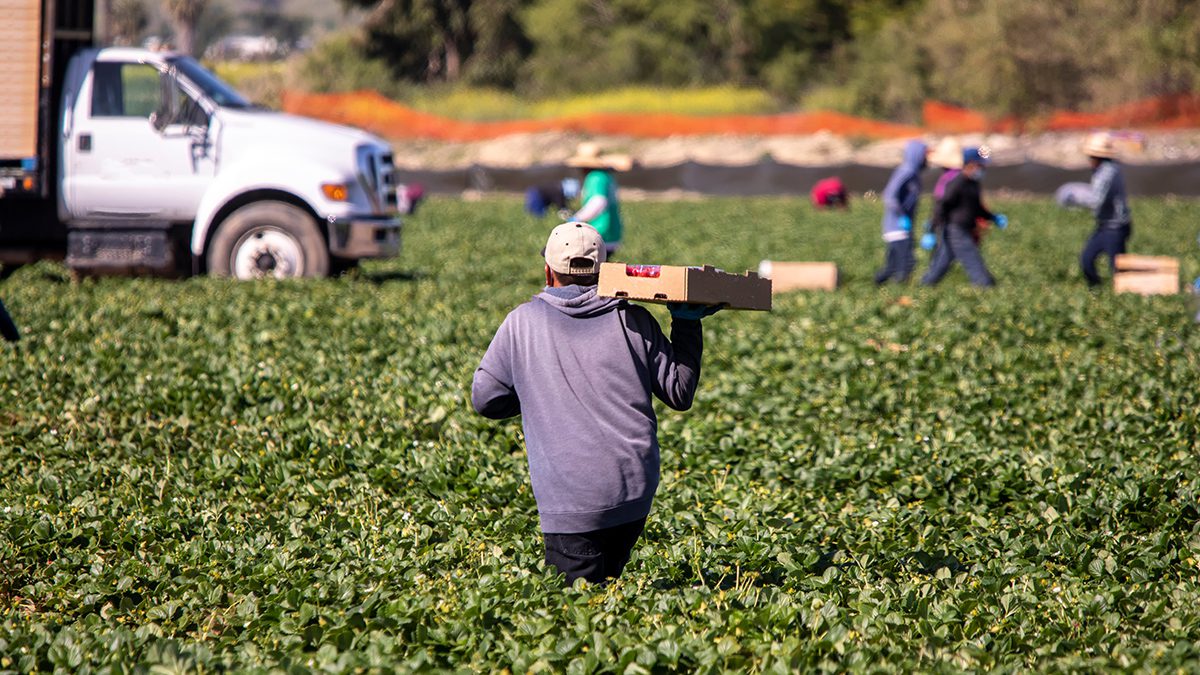
On Thursday, March 19, 2026, Charles Brennan, Income and Housing Policy Director at CCLP, provided testimony in opposition to Senate Bill 26-121, Overtime Threshold for Agricultural Employees and in support of Senate Bill 26-081, Increase Agricultural Employee Overtime Protections. SB26-121 would require farmworkers to work a minimum of 60 hours per week to receive overtime pay, whereas SB26-081 would have increased overtime protections for farmworkers after 40 hours per week, ensuring consistency with other workers in Colorado for overtime pay. Unfortunately, SB26-081 was postponed indefinitely.
Chair and members of the committee, my name is Charles Brennan, Director of Income and Housing Policy at the Colorado Center on Law and Policy, an antipoverty organization advancing the rights of every Coloradan. I am here today in opposition to SB26-121 and in support of SB26-081.
Congress excluded farmworkers from the 1938 Fair Labor Standards Act, an inequity Colorado has still not fully corrected. We took an important step in 2021, and after a five-year implementation period, agricultural workers now receive overtime after 48 hours per week. That threshold is already a compromise. SB26-121 would move it to 60 hours across the board, requiring farmworkers to put in 20 hours more than any other Colorado worker each week before overtime kicks in.
Overtime protections exist for good reason. Agricultural work involves extreme heat, chemical exposure, and heavy lifting—conditions that make long hours particularly dangerous. The fatal injury rate in agriculture in Colorado was 17.6 per 1,000 workers in 2024, nearly six times the rate for all industries in the state.[1] Research shows workers who log 60 or more hours per week face a 23% greater risk of on-the-job injury.[2] SB26-121 would raise the threshold at which those protections apply in an already dangerous industry.
We also question whether this bill targets the right problem. Fewer than one in five Colorado farm operations reported paying wages to hired workers in the 2022 Census of Agriculture.[3] Even among those that do, workers at highly seasonal operations currently receive overtime after 56 hours during peak weeks—meaning this bill would raise the overtime threshold for some of the most heavily worked farmworkers in the state by just 4 hours.[4]
Meanwhile, over half of all farms reported costs for property taxes, fuel, repairs, and animal feed—and between 2017 and 2022, fertilizer costs alone rose nearly 10% per year due to disruptions in the market from the war in Ukraine[5]—disruptions we are starting to see again due to our conflict with Iran.[6] The conflict’s upward pressures on fuel prices are also a growing expense to farmers. These are the costs affecting the majority of operations, and none of them have anything to do with overtime pay.
We urge the committee to oppose SB26-121 and support SB26-081, and we encourage the sponsors to pursue relief for Colorado’s agricultural industry through approaches that do not come at the expense of its workers. Thank you.
**********
[1] https://www.bls.gov/iif/state-data/fatal-injury-rates-by-state-and-industry-2024.htm
[2] https://pmc.ncbi.nlm.nih.gov/articles/PMC1741083/
[3]https://www.nass.usda.gov/Publications/AgCensus/2022/Full_Report/Volume_1,_Chapter_2_County_Level/Colorado/st08_2_007_007.pdf
[4]https://cdle.colorado.gov/sites/cdle/files/info_%2312a_overtime_and_minimum_wage_for_agricultural_employment_2026%29_12.18.2025.pdf
[5]https://www.nass.usda.gov/Publications/AgCensus/2022/Full_Report/Volume_1,_Chapter_1_State_Level/Colorado/st08_1_004_004.pdf
[6] https://www.fb.org/market-intel/middle-east-tensions-raise-spring-planting-concerns
Recent articles
Why CCLP supports Amendment 87 and Proposition NN and opposes Proposition 136
A voter guide to funding health care, childcare and public schools Coloradans need affordable health care, reliable childcare, and strong public schools to build economic security. Colorado Center on Law and Policy supports Amendment 87 and Proposition NN because...
Economic policy and young adulthood in Colorado: Part Two
Part Two in our Young Adult series examines eleven common--but false--narratives about young adults, life choices, and the opportunities available to them.
Guest Column: Tax Flight, The Harmful Persistence of an Unfounded Idea
CCLP volunteer Elzer McReynolds argues why tax flight is a harmful idea to states trying to enact higher taxes on the top 1% of earners.
CCLP reflections from Litigation and Advocacy Leaders Conference
Annie Martínez reflects on the Litigation and Advocacy Leaders Conference they attended with support from our CCLP Rights Defenders donors.