CCLP volunteer Elzer McReynolds argues why tax flight is a harmful idea to states trying to enact higher taxes on the top 1% of earners.
Recent articles
CCLP reflections from Litigation and Advocacy Leaders Conference
Annie Martínez reflects on the Litigation and Advocacy Leaders Conference they attended with support from our CCLP Rights Defenders donors.
Economic policy and young adulthood in Colorado: A new report series from CCLP
CCLP’s newest report series focuses on economic policy and young adulthood in Colorado and the ways in which public benefits do and do not support their needs.
CCLP comments on Xcel Energy’s proposed rate increase
Milena Tayah provided comments to the Public Utilities Commission regarding Xcel Energy’s proposed rate increase on Colorado consumers’ energy bills.
A SNAP-shot of food stamp access in Colorado
Food stamps provide eligible families with a modest monthly stipend to purchase food — averaging $1.40 per person, per meal. The majority of those eligible are children, seniors, working adults, veterans and those who are disabled. The program not only provides access to the fuel needed for healthier lives but also helps create jobs, increase grocery sales and support local food producers.
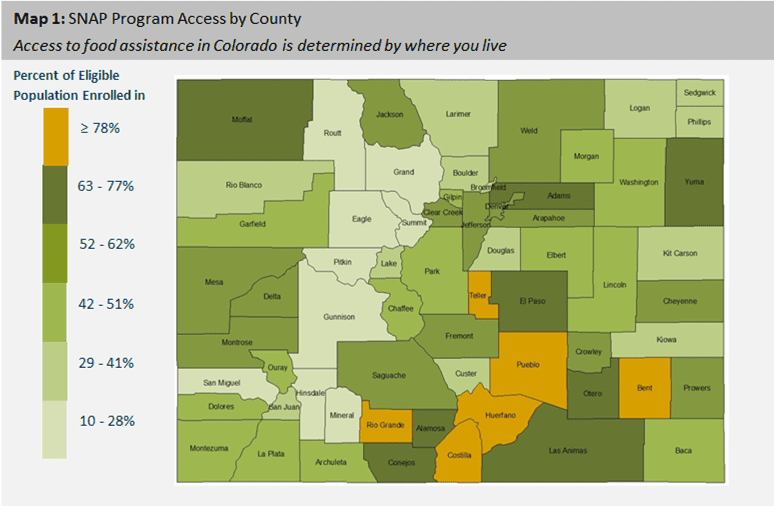
New data highlights longstanding issues with the administration of food stamps in Colorado. Despite the effectiveness and efficiency of the program nationally, Colorado’s state-supervised, county-administered system underperforms in some of the key metrics. While some Colorado counties meet national averages and federal guidelines, the overall data shows below-average performance at the state and county levels.
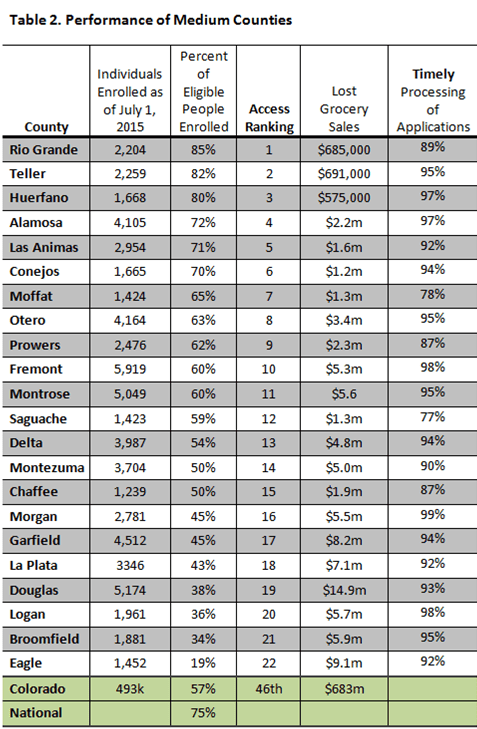
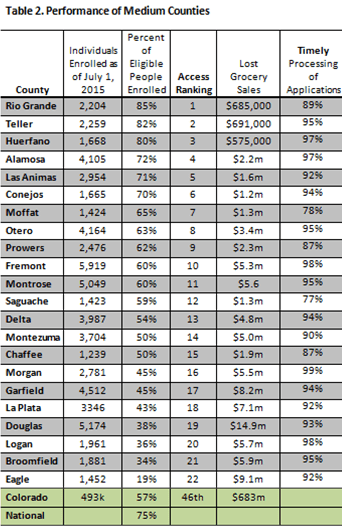
Hunger Free Colorado’s newly released Food Stamp Impact Reports compare each county’s performance with other counties of similar size and shows the state and national averages for enrollment, timely and accurate application processing, expenditures and economic impact.
Highlights from the new data include:
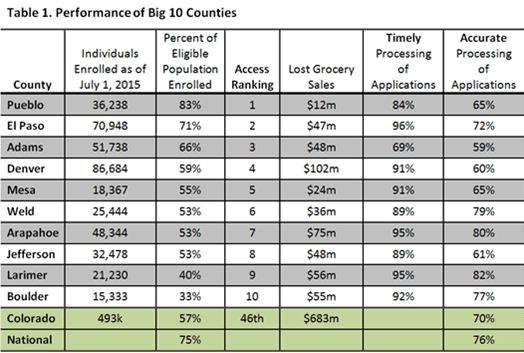
- Colorado ranks 45th in the nation for access to food stamps. Only 57 percent of the eligible population is enrolled in food assistance in Colorado, well below the national average of 75 percent for enrollment.
- Colorado leaves millions of dollars on the federal table and loses more than $686 million annually in grocery sales.
- Colorado’s unique state-supervised, county-based system underperforms in enrollment and accurate application processing, despite the effectiveness and efficiency of the SNAP program nationally.
- There is significant disparity across counties on performance and costs. SNAP enrollment ranges from 10 to 83 percent of eligible Coloradans depending on where you live. Among the 10 largest counties, the administrative cost for enrolling people in food assistance ranges from a low of $80 to a high of $287 per recipient and spending more does not translate to better outcomes.
- Since 2012, Colorado enrolled more than 631,000 new individuals in Medicaid, while losing more than 2,000 individuals from the food assistance program despite an estimated 63 percent dual-eligibility rate.
A growing body of national research shows the importance of food stamps in improving short and long-term health outcomes, lowering health care costs, promoting work and economic stability, enhancing academic performance and early childhood education outcomes, helping seniors maintain their independence, and boosting economic development, such as grocery sales.
Together with Hunger Free Colorado, CCLP has used to the findings of the impact reports to push for changes in the way SNAP works in Colorado through proposed legislative remedies and direct outreach to state and local officials.
– Hunger Free Colorado
Recent articles
Guest Column: Tax Flight, The Harmful Persistence of an Unfounded Idea
CCLP volunteer Elzer McReynolds argues why tax flight is a harmful idea to states trying to enact higher taxes on the top 1% of earners.
CCLP reflections from Litigation and Advocacy Leaders Conference
Annie Martínez reflects on the Litigation and Advocacy Leaders Conference they attended with support from our CCLP Rights Defenders donors.
Economic policy and young adulthood in Colorado: A new report series from CCLP
CCLP’s newest report series focuses on economic policy and young adulthood in Colorado and the ways in which public benefits do and do not support their needs.
CCLP comments on Xcel Energy’s proposed rate increase
Milena Tayah provided comments to the Public Utilities Commission regarding Xcel Energy’s proposed rate increase on Colorado consumers’ energy bills.