
CCLP volunteer Elzer McReynolds argues why tax flight is a harmful idea to states trying to enact higher taxes on the top 1% of earners.
Charles Brennan serves as CCLP's Income and Housing Policy Director, using data and research to support our efforts to advance the rights of every Coloradan. Staff page ›
Recent articles
CCLP reflections from Litigation and Advocacy Leaders Conference
Annie Martínez reflects on the Litigation and Advocacy Leaders Conference they attended with support from our CCLP Rights Defenders donors.
Economic policy and young adulthood in Colorado: A new report series from CCLP
CCLP’s newest report series focuses on economic policy and young adulthood in Colorado and the ways in which public benefits do and do not support their needs.
CCLP comments on Xcel Energy’s proposed rate increase
Milena Tayah provided comments to the Public Utilities Commission regarding Xcel Energy’s proposed rate increase on Colorado consumers’ energy bills.
Congress must extend unemployment insurance benefits
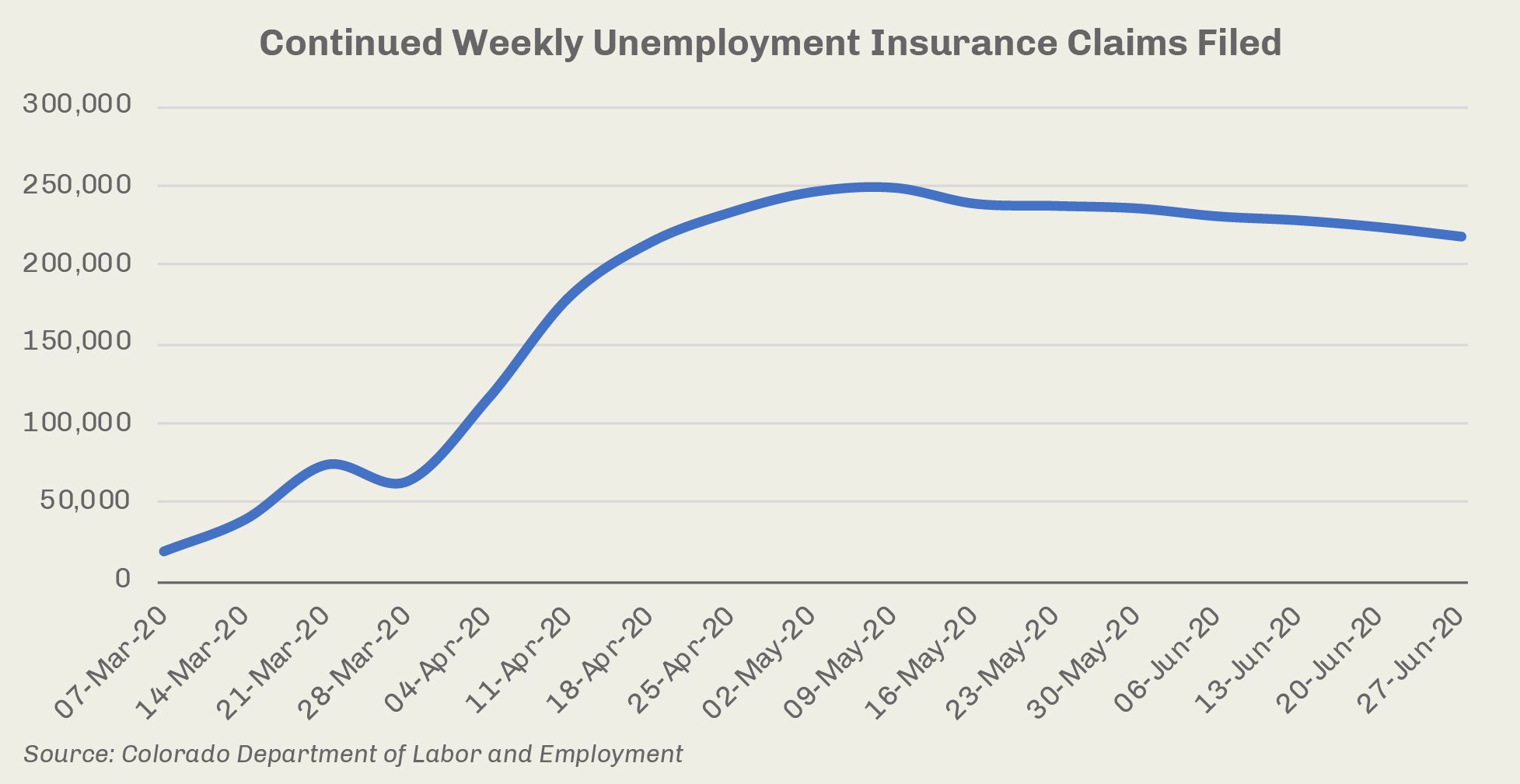
This is the last week the nearly 240,000 Coloradans who are on or currently applying for unemployment insurance will receive an expanded $600-a-week benefit. Officially known as Pandemic Unemployment Compensation (PUC), this benefit was designed to ensure the unemployment insurance programs in every state replaced 100 percent of workers’ wages.
Unlike regular unemployment benefits, PUC was paid for by the federal government, not the states’ unemployment trust funds. Given Colorado’s replacement rate of approximately 48 percent, the bottom 70 percent of wage earners in the state who applied for unemployment insurance likely received benefits that exceeded what they earned in their previous job, providing Colorado workers with much needed additional income to support themselves and their families during this public health emergency, as well as spend in our state’s economy at a time of and extraordinary economic decline.
While the past months have seen a record number of jobs lost and gained, our state is still experiencing an unprecedented economic situation. It is too early to tell how quickly the economy will recover, what that recovery will look like, or if things will get worse before they get better as new cases of COVID-19 continue to rise. Colorado lost more than 342,000 non-farm jobs during March and April before adding 71,000 non-farm jobs in May and 55,000 non-farm jobs in June, leaving the state with a net loss of about 216,300 jobs.
While initial unemployment claims are down from their peak of 104,572 for the week ending in April 11, more Coloradans filed initial claims during the week ending in July 11 than they did during the peak of the Great Recession. Troublingly, the week of July 11 also saw an increase of approximately 2,500 initial claims compared to the previous week. This sharp increase in unemployment has affected a majority of households in the state. The U.S. Census Bureau reports that during the week of July 2 to July 7, 52.2 percent of Coloradans over the age of 18 lived in a household where someone had experienced a loss of employment income since March 13, 2020.
The problem is that there is not enough job available for every unemployed worker in the state to fill. Despite claims that the generous unemployment insurance benefits provided through PUC would encourage workers to remain on unemployment insurance instead of looking for employment, the number of Coloradans employed or unemployed but looking for work actually increased by over 114.5 thousand between April and June. Worryingly, Colorado’s unemployment rate increased between May and June from 10.2 percent to 10.5 percent, signaling that a growing number of Coloradans who were looking for work were unable to find employment during the previous month. And it’s important to remember that even a 10.2 percent unemployment rate is the highest Colorado has seen in at least 44 years, if not since the Great Depression.
PUC discouraged laid off or furloughed workers from cutting back on spending, limiting the economic contraction that came with shutting down our state’s economy. For example, during the week ending in June 27, 2020, the expanded unemployment insurance benefits added an additional $131.4 million into the pockets of Coloradans receiving unemployment insurance that could then be spent in the state’s economy. Research from past recession suggests that each dollar spent through unemployment insurance benefits generates as much as $2 of indirect spending in the economy, supporting businesses and jobs that otherwise would have been lost. According to estimates by the Economic Policy Institute, failing to extend PUC for another year (through July 2021) could lead to a loss of 66,898 Colorado jobs over the next year — hampering recovery efforts in the state.
Learn more about the PUC and why it’s important in this CCLP issue brief.
Ask Sen. Cory Gardner and President Donald Trump not to eliminate this lifeline for unemployed Coloradans, their families and Colorado’s economy!:
- Call the White House: 202-456-1111
- Call Sen. Gardner: 202-224-3121
– By Charlie Brennan
Recent articles
Guest Column: Tax Flight, The Harmful Persistence of an Unfounded Idea
CCLP volunteer Elzer McReynolds argues why tax flight is a harmful idea to states trying to enact higher taxes on the top 1% of earners.
CCLP reflections from Litigation and Advocacy Leaders Conference
Annie Martínez reflects on the Litigation and Advocacy Leaders Conference they attended with support from our CCLP Rights Defenders donors.
Economic policy and young adulthood in Colorado: A new report series from CCLP
CCLP’s newest report series focuses on economic policy and young adulthood in Colorado and the ways in which public benefits do and do not support their needs.
CCLP comments on Xcel Energy’s proposed rate increase
Milena Tayah provided comments to the Public Utilities Commission regarding Xcel Energy’s proposed rate increase on Colorado consumers’ energy bills.